Source Latex Resistance Bands Set for Gym, Home, Physiotherapy
Compare 30 Latex Resistance Bands Set options from verified suppliers. Browse models with varying thickness, resistance levels, and customization features for fitness, gymnastics, and physiotherapy applications.
Key considerations
Products List


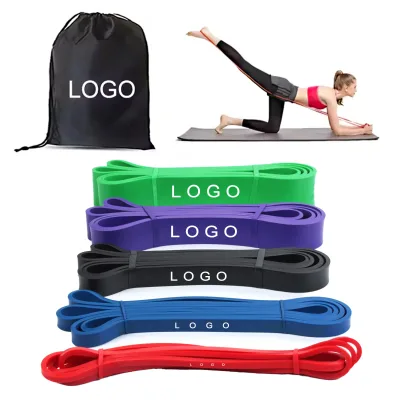
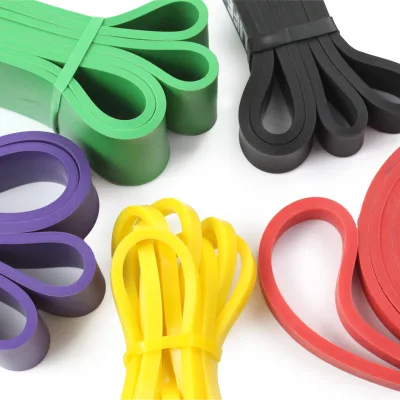
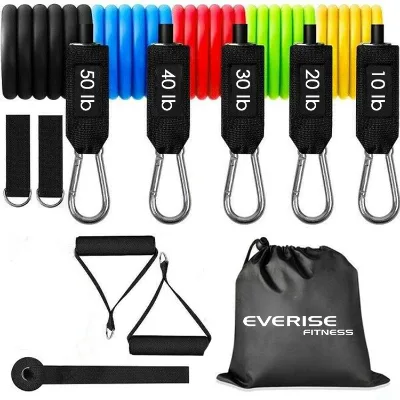
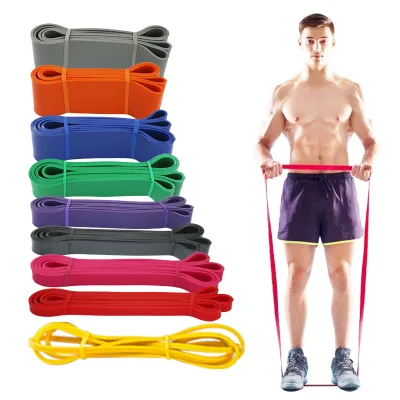



Comprehensive Sourcing Guide
Strategic Sourcing Guide for Latex Resistance Bands Sets
Procuring a Latex Resistance Bands Set requires a disciplined approach that balances material integrity, dimensional precision, and supply chain reliability. The market for these fitness accessories is saturated with variations in thickness, resistance levels, and packaging standards. Buyers must navigate a landscape where product attributes are often listed as observations rather than universal guarantees. This guide outlines the critical technical and operational factors necessary for a successful procurement strategy, focusing on the specific data points observed in current market listings to ensure informed decision-making.
Technical Specifications and Material Composition
The foundation of a high-quality resistance band set lies in its material composition and dimensional consistency. The primary observation across the supplied product data indicates that the core material is 100% natural latex. This attribute is critical for buyers seeking elasticity and durability, as synthetic alternatives often lack the same tensile strength and feel. However, the specific thickness of the bands varies significantly between listings, ranging from 0.4mm to 1.5mm. Some product models specify a narrower range of 0.5mm to 1.1mm. This variance suggests that buyers must explicitly define their required resistance levels, as thickness directly correlates with the force output of the band.
Dimensional standards also present a wide spectrum of options. Observed product standards include lengths such as 19.5 cm, 50 cm, 60 cm, and 1.2 meters, with some listings offering custom dimensions up to 2080mm or 600mm by 50mm. The lack of a single industry-standard length implies that procurement contracts must explicitly state the required dimensions to avoid receiving mismatched inventory. Furthermore, the resistance levels are sometimes quantified in pounds, with observed values ranging from 10LBS to 30LBS. When sourcing a set, the buyer must verify if the product includes a mix of these resistance levels or if they are purchasing a single uniform band. The "Gradient Pink" color option and "Solid Color" availability indicate that aesthetic customization is a viable feature, but this should be treated as a secondary specification to the functional requirements of the set.
Compliance, Certification, and Safety Verification
While the supplied data highlights the "100% Natural Latex" feature, it does not explicitly confirm compliance with international safety certifications such as REACH, RoHS, or specific latex allergy warnings. In the B2B context, the absence of listed certification data necessitates a proactive verification process. Buyers should not assume that a product labeled as natural latex is free from harmful chemicals or that it meets the safety standards of the destination market. The "Anti Slip" feature is listed as a product attribute, yet the testing methodology behind this claim is not provided in the source data.
To mitigate risk, procurement teams must request third-party test reports verifying the chemical composition of the latex and the absence of hazardous substances. Additionally, the "Customized" logo and "OEM Accept" attributes suggest that branding is a common practice, but this customization process must not compromise the material's integrity. Buyers should verify that the printing inks used for logos are non-toxic and adhere to the relevant safety standards for products intended for skin contact. Since the product origin is listed as China, specifically Hebei and Jiangsu provinces, buyers should be aware of regional manufacturing capabilities and ensure that the specific factory selected adheres to the quality control protocols required for the target export market.
Cost Drivers and Pricing Dynamics
The observed price range for these products spans from $0.12 to $25 USD, a significant variance that reflects differences in material quality, set complexity, and order volume. The lower end of the spectrum likely corresponds to single bands or basic sets with minimal packaging, while the higher end may represent comprehensive 11-piece sets, such as the "Resistance Tube 11PCS" observed in the data. The Minimum Order Quantity (MOQ) is another critical cost driver, with observed values ranging from 2 to 1000 pieces. Some listings specify an MOQ of 100 PCS, while others require 200 PCS.
Buyers must understand that unit costs are inversely related to order volume. A small order of 50 units will carry a significantly higher per-unit cost compared to an order of 1000 units. The "Customization" feature, including logo printing and specific color gradients, often incurs additional setup fees and may increase the MOQ threshold. The "Polybag+Carton" and "Paper Crap/Box" packaging options also influence the final landed cost. Bulk packaging in cartons is generally more cost-effective for shipping, whereas individual polybagging adds labor and material costs. When negotiating, buyers should request a tiered pricing structure that clearly delineates costs based on the selected thickness, length, and customization level.
Typical Applications and Usage Scenarios
The versatility of latex resistance bands makes them suitable for a diverse range of applications. The observed usage categories include "Exercise and Fitness," "Gymnastics," "Physiotherapy," and "Home Exercise." This broad applicability means that a single product specification may not satisfy all potential market segments. For instance, bands intended for physiotherapy may require higher durability and specific resistance levels compared to those designed for general home fitness. The "Folded" attribute suggests that some products are designed for portability, making them ideal for travel or compact home gyms.
The target demographic also varies, with listings specifying "Women," "Adults," and "Unisex" users. This indicates that marketing and product design should be tailored to the specific audience. For example, a set marketed toward women might emphasize aesthetic features like "Gradient Pink" colors, while a set for unisex or male users might focus on higher resistance levels and robust packaging. The "Manual" power source and "Home" appliance classification confirm that these products are designed for non-electric, user-driven exercise routines. Buyers should ensure that the product description clearly aligns with the intended use case to avoid customer dissatisfaction.
Supplier Evaluation and Operational Capabilities
Evaluating suppliers for latex resistance bands requires a focus on their production capacity, lead times, and logistical capabilities. The observed lead time for production is listed as 20-45 days, with a sample lead time of 15 working days. These timelines are critical for supply chain planning, particularly for buyers with tight delivery schedules. The "Customized" nature of the products implies that lead times may extend if complex branding or non-standard dimensions are required.
Suppliers are located in various regions of China, including Hebei and Jiangsu. While the specific supplier names are not provided, buyers should verify the factory's location and capacity to ensure it matches the required production volume. The "OEM Accept" and "Logo: Custom Accept" attributes indicate that suppliers are willing to work with private labels, but the buyer must confirm the supplier's ability to maintain consistent quality across large batches. Payment terms such as "Trade Assurance," "Western Union," and "TT" are observed, offering various levels of financial security. Buyers should prioritize suppliers who offer Trade Assurance to protect against non-delivery or quality discrepancies.
Quality Control and Long-Term Procurement
Ensuring long-term quality in resistance band procurement involves establishing rigorous quality control (QC) protocols. The observed thickness variations (0.4mm to 1.5mm) highlight the need for precise measurement during the QC process. Buyers should implement a sampling plan that tests for tensile strength, elasticity retention, and surface defects. The "Anti Slip" feature should be verified through practical testing to ensure the bands do not slip during high-intensity exercises.
Long-term procurement considerations include the stability of the supply chain and the ability of the supplier to scale production. The "Carton" and "Polybag+Carton" packing methods suggest that the supplier has established packaging lines, but buyers should confirm that the packaging is durable enough to prevent damage during transit. Additionally, the "Customized" standard of 50/60 cm or other dimensions requires clear communication to avoid production errors. Buyers should establish a long-term relationship with a supplier who can consistently meet the specified thickness, length, and resistance requirements. Regular audits and quality checks are essential to maintain the integrity of the product over time, ensuring that the "100% Natural Latex" claim remains valid throughout the product lifecycle.
Comparison of Key Product Attributes
To facilitate a clearer understanding of the market landscape, the following table summarizes the key attributes observed in the current product listings. This comparison aids in identifying the specific requirements that must be defined before placing an order.
| Attribute Category | Observed Variations | Procurement Consideration |
|---|---|---|
| Material | 100% Natural Latex | Verify chemical safety and allergy compliance. |
| Thickness | 0.4mm to 1.5mm (varies by model) | Define exact thickness for target resistance level. |
| Dimensions | 19.5cm to 2080mm; 50/60cm; 1.2m | Specify exact length to match usage requirements. |
| Resistance | 10LBS to 30LBS | Confirm if set includes mixed resistance levels. |
| Customization | Logo, Color, Dimensions, Standard | Confirm setup costs and MOQ for custom orders. |
| Packaging | Polybag+Carton, Paper Box, CTN | Ensure packaging protects product during shipping. |
| Lead Time | 20-45 days (Production); 15 days (Sample) | Plan inventory based on extended lead times. |
| MOQ | 2 to 1000 PCS (some list 100/200) | Negotiate volume tiers to optimize unit cost. |
By adhering to these guidelines and leveraging the specific data points available, buyers can navigate the complexities of sourcing latex resistance bands sets effectively. The key lies in precise specification definition, rigorous supplier vetting, and a commitment to quality control that extends beyond the initial order.
FAQs
What is the typical thickness range for latex resistance bands?
The observed thickness ranges from 0.4mm to 1.5mm depending on the specific product model. Buyers must verify the exact thickness required for their desired resistance level as variations exist between 0.5mm and 1.1mm in some listings.
Can I customize the logo and color of the resistance bands?
Yes, customization for logos and colors like Gradient Pink is available for most models. Buyers should note that custom orders may require higher Minimum Order Quantities and could extend the standard production lead time of 20 to 45 days.
What are the standard dimensions and resistance levels offered?
Standard lengths include 50cm, 60cm, 1.2m, and 19.5cm, with resistance levels ranging from 10LBS to 30LBS. Some models offer custom dimensions up to 2080mm, so specific length requirements must be defined before ordering.
How long does it take to produce a custom order?
The standard production lead time is between 20 and 45 days from order confirmation. Sample orders typically require 15 working days, while complex customizations may extend the timeline depending on the supplier's capacity in Hebei or Jiangsu.
What packaging options are available for shipping these bands?
Common packaging includes Polybag plus Carton or Paper Box options depending on the supplier. Bulk carton packaging is generally more cost-effective for shipping, while individual polybagging adds labor costs but protects individual units.
What is the minimum order quantity for latex resistance bands?
Minimum Order Quantities vary significantly, ranging from 2 pieces to 1000 pieces per listing. Specific models often require 100 or 200 pieces, so buyers should confirm the MOQ for their selected thickness and customization level.
Are these bands suitable for physiotherapy and home exercise?
Yes, the products are explicitly designed for Exercise and Fitness, Gymnastics, Physiotherapy, and Home Exercise. The manual power source and natural latex material make them versatile for both clinical rehabilitation and general fitness routines.